
After the Great East Japan Earthquake, I reevaluated my life and moved to Kumano, relying on a friend.
-Could you tell us about the circumstances and reasons leading up to your move?
I lived in Osaka until fifth grade, then moved to Nara due to my father’s work. While in Osaka, I was surrounded by an environment lacking mountains and nature. In Nara, however, I was much closer to nature, which sparked my love for it. Even in junior high, I often drew pictures featuring trees as motifs, so my interest in nature has been consistent since then.
My family runs an izakaya, and before coming to Kojou, I helped with the family business. I was involved in everything from serving customers to cooking, but somewhere in my heart, I always held the desire to “work with nature.” Then, the Great East Japan Earthquake in 2011 became a major catalyst for me to rethink my way of life, and I decided to relocate.
-Why did you choose Kojou and charcoal-making work?
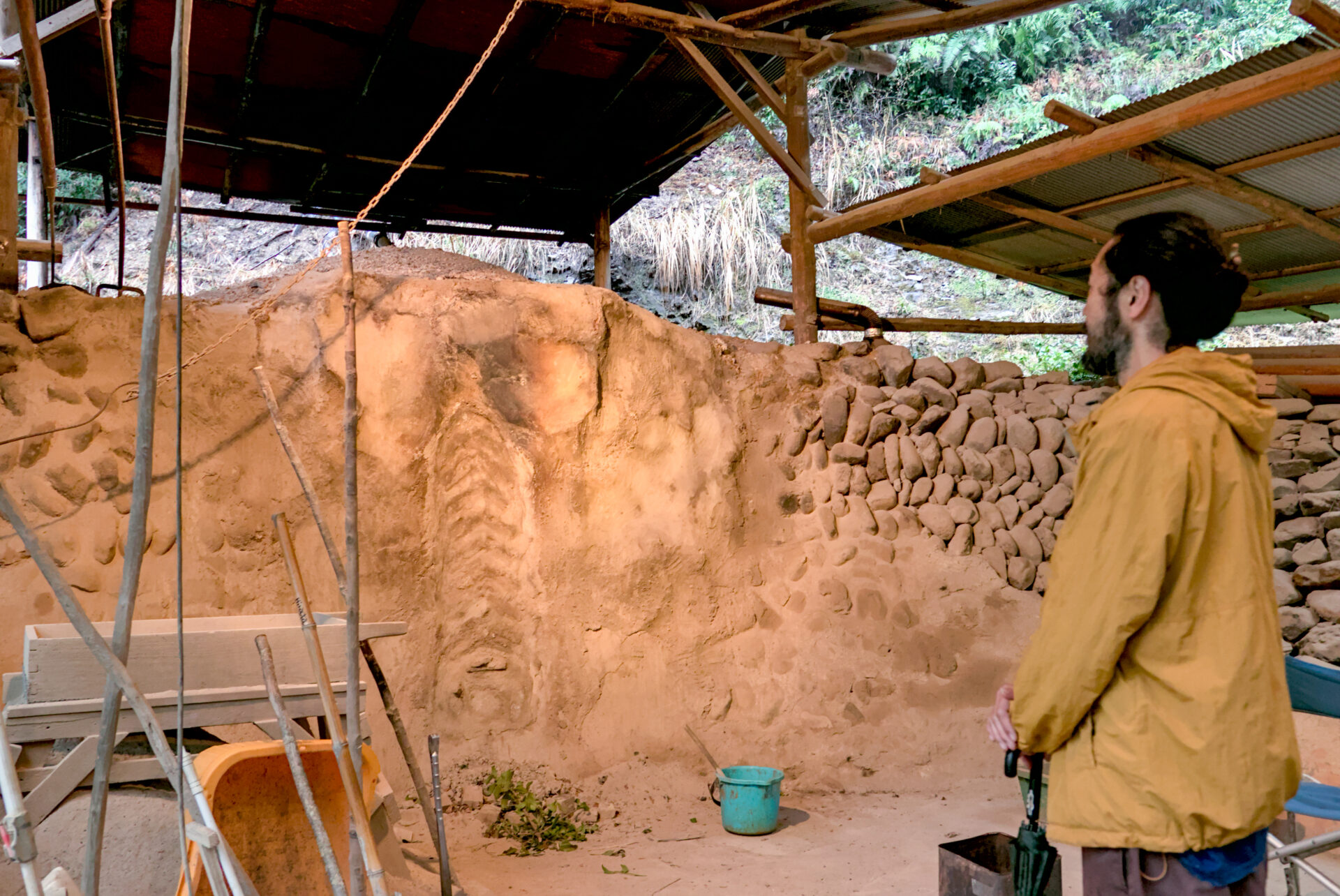
I visited a friend who was making binchōtan charcoal in this area and got to see his work and lifestyle up close. As I visited several times, I became drawn to the lifestyle of his family, living amidst the great outdoors. I thought, “I want to build a family like this,” and when I told him I wanted to become a charcoal maker, he gladly accepted me. So, my wife and I moved to Kōshō. We even built the kiln for making charcoal ourselves, learning from my friend.
The appeal and challenges of traditional Kishu binchotan production.
-What has it been like actually working as a charcoal maker?
Every day, I’m acutely aware that charcoal making is truly hard work. Above all, sourcing the raw material—ubame oak—is the biggest challenge. We use trees that have grown for 20 to 40 years to make charcoal, and finding such trees is no easy task. It takes time to speak directly with the landowners, submit felling applications, and obtain permits.
-Are Ubamegashi trees themselves becoming scarce?
I think over-harvesting has destroyed their regenerative capacity… I believe it’s crucial not to clear-cut the entire forest, but to preserve the vitality of the stumps and maintain the mountain’s energy balance.
For example, if six trees grow from one rootstock, I leave two. By preserving the rootstock, new shoots emerge, connecting the life force to the next generation. Since results aren’t immediate, this is just my personal theory, but I feel like I’m making my own efforts to help the mountain regenerate.
-What’s the appeal of charcoal-making in this area?
Until about 50 years ago, nearly every household north of Kojō made charcoal—this region was thriving with binchōtan production. Kojō is considered one of the birthplaces of binchōtan. I’ve even heard stories of master charcoal makers from here later moving to Minabe Town and spreading the craft there. Being able to make charcoal in such a place feels like it holds some profound significance.
Amidst abundant nature, we continue our endeavors valuing the act of “creating.”
-When you first moved here, was there anything you consciously did to integrate with the local people and community?
Since moving here, the local people have truly welcomed me with open arms. To integrate into the community, I’ve made a point of actively participating in village communal work like cleaning temples and shrines, and cleaning agricultural waterways known as “mizobushin.”
I believe engaging in these activities and communicating with villagers is crucial for daily life. If someone who moves here stays cooped up at home, neighbors might start wondering, “What kind of person is that?” By taking the initiative to connect, I think the villagers warmly accept you.
-What are the positive aspects and challenges of raising children in this area?
My son is in second grade and takes the school bus. The small class sizes mean teachers can give each student close attention, which is reassuring. On the other hand, while he attends after-school care, there aren’t any children his age living within walking distance of our house, so opportunities to play with friends are limited.
However, compared to my own childhood when my parents ran an izakaya, I feel we can spend much more time together as a family now. My job doesn’t require working late nights, and I truly appreciate the importance of a regular rhythm where we eat meals together as a family.
-I understand that even after ten years here, you’re still experimenting with things like sourcing Ubamegashi oak. How do you envision the future?
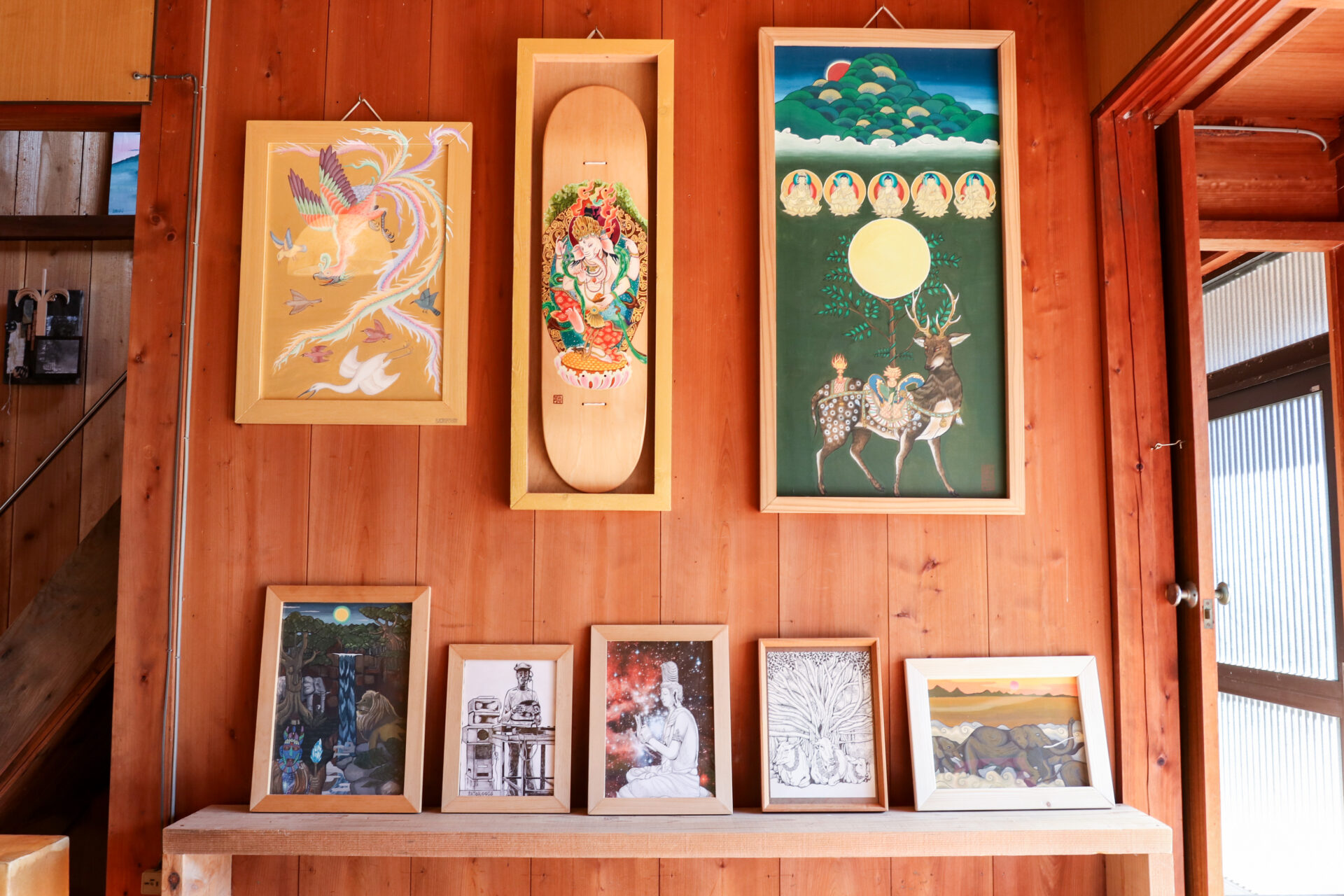
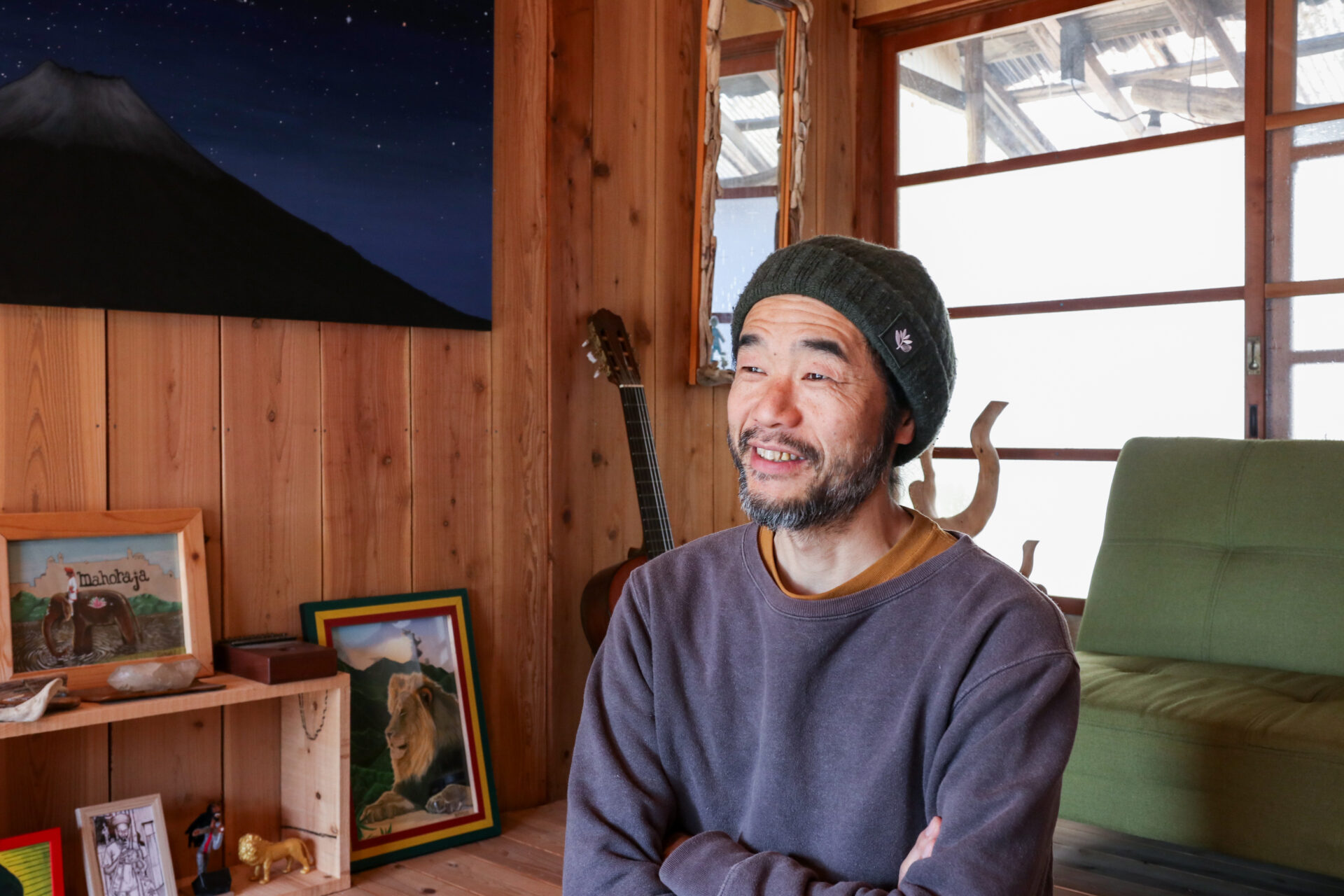
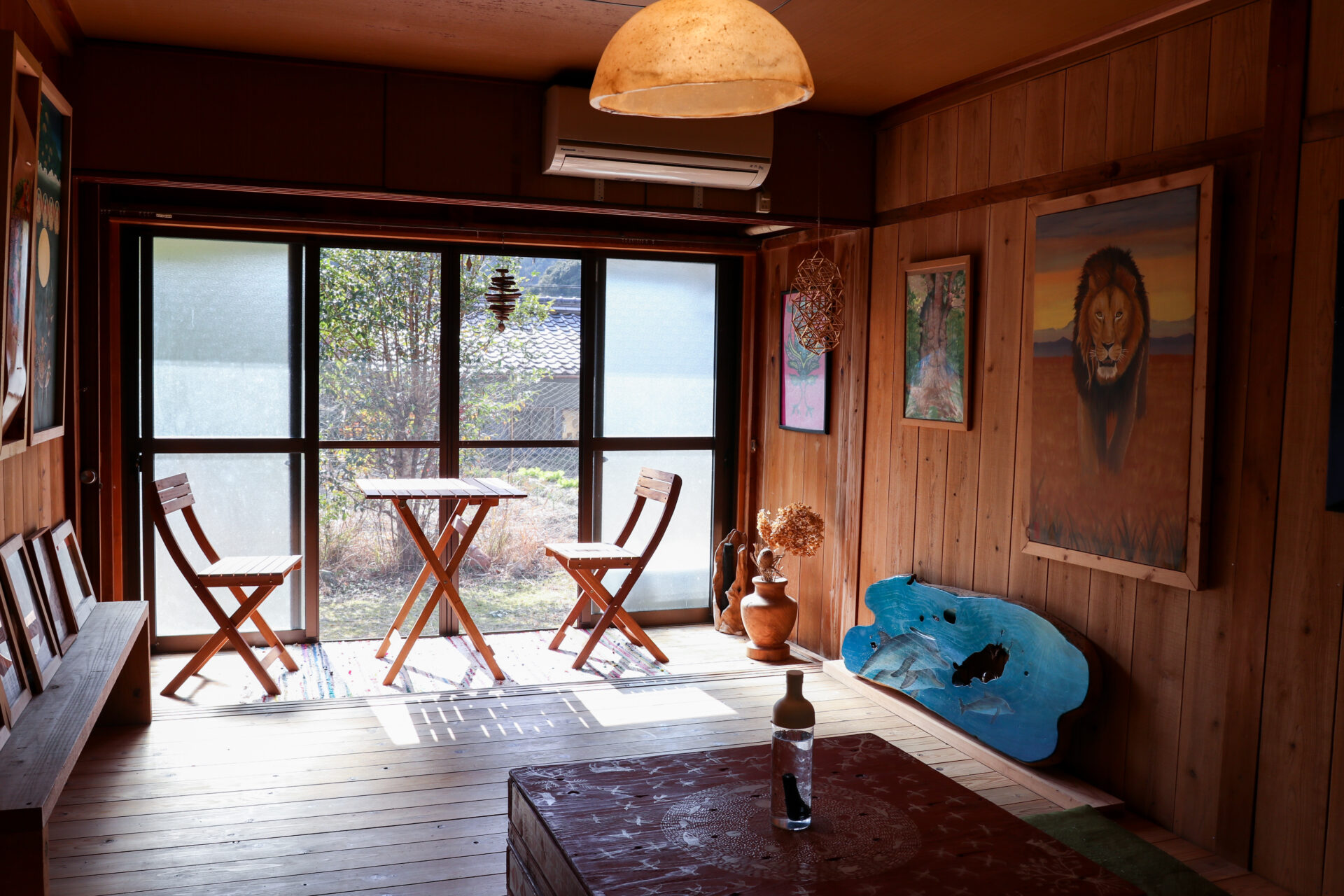
There are challenges, but moving to this land has helped me find balance mentally and physically. Now that I’ve turned 50, it feels like standing at a new starting point. Living in this naturally rich area of Kōshō, I want to cherish creating things with my own hands—whether it’s charcoal-making, painting, or growing vegetables in my home garden. I aim to enhance the brand power of Kumano binchotan charcoal, increase my solo art exhibitions, and establish a regular schedule for my home gallery, “mahoraja.” Nothing starts unless I take action myself, so for the next ten years, while my body allows, I intend to challenge myself with what I can do.
・Instagram: mahoraja
※Please check Instagram for the gallery “mahoraja” opening dates.