
Clues to the life he was searching for, found in a village he wandered into by chance.
– Please tell us how you first visited the Irokawa area and what led you to move here.
During my fourth year of university, when I started job hunting, I realized that the whole process just didn’t suit me. I tried for a couple of months in March and April, but things didn’t go well, and I quit. Around May, when I began wondering what to do next, I decided to drive around the Kishu area for the time being.
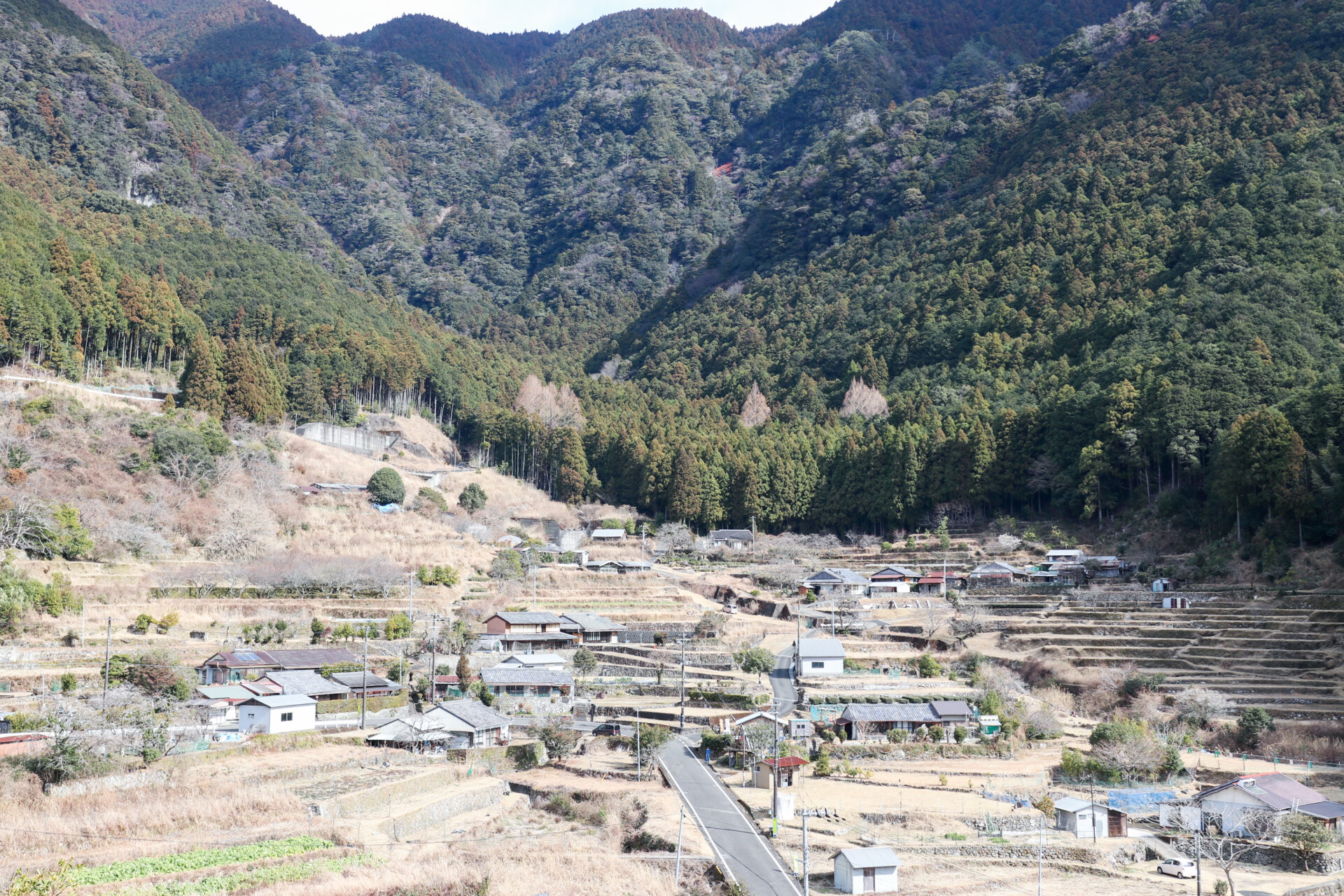
I had long been interested in environmental issues, and I vaguely felt that a self-sufficient life grounded in production rather than consumption might be the right way for me to live. Around that time, I happened to stray onto a narrow mountain road leading out of Kozagawa Town, and it brought me to the deepest settlement in Irokawa.
When I saw the landscape overlooking terraced rice fields, I was surprised—“People actually live in a place like this.” Having grown up in the cities of Hiroshima and Nagoya, I had always thought it was normal for houses to line flat land. Seeing homes scattered along steep slopes felt almost incomprehensible—how could people live here? At the same time, I felt there might be clues here to the life I was looking for.
– Did you decide to move here right away after that?
Later, I found an article about a Community-Reactivating Cooperator Squad being recruited in Irokawa, so I went back to learn more. There, I saw people actually practicing self-sufficient living. I visited several times and stayed for periods ranging from a few days to as long as two weeks. Through those experiences, I began to feel, “I really could live like this.”
At that point, I thought I didn’t necessarily need to join the program—I could just move here more casually. I talked to my parents, and since they didn’t oppose the idea, the hurdle to relocating didn’t feel very high.
The role of Tokumori Lumber: producing materials from local trees for life in this place.
– How satisfied are you with your current lifestyle?
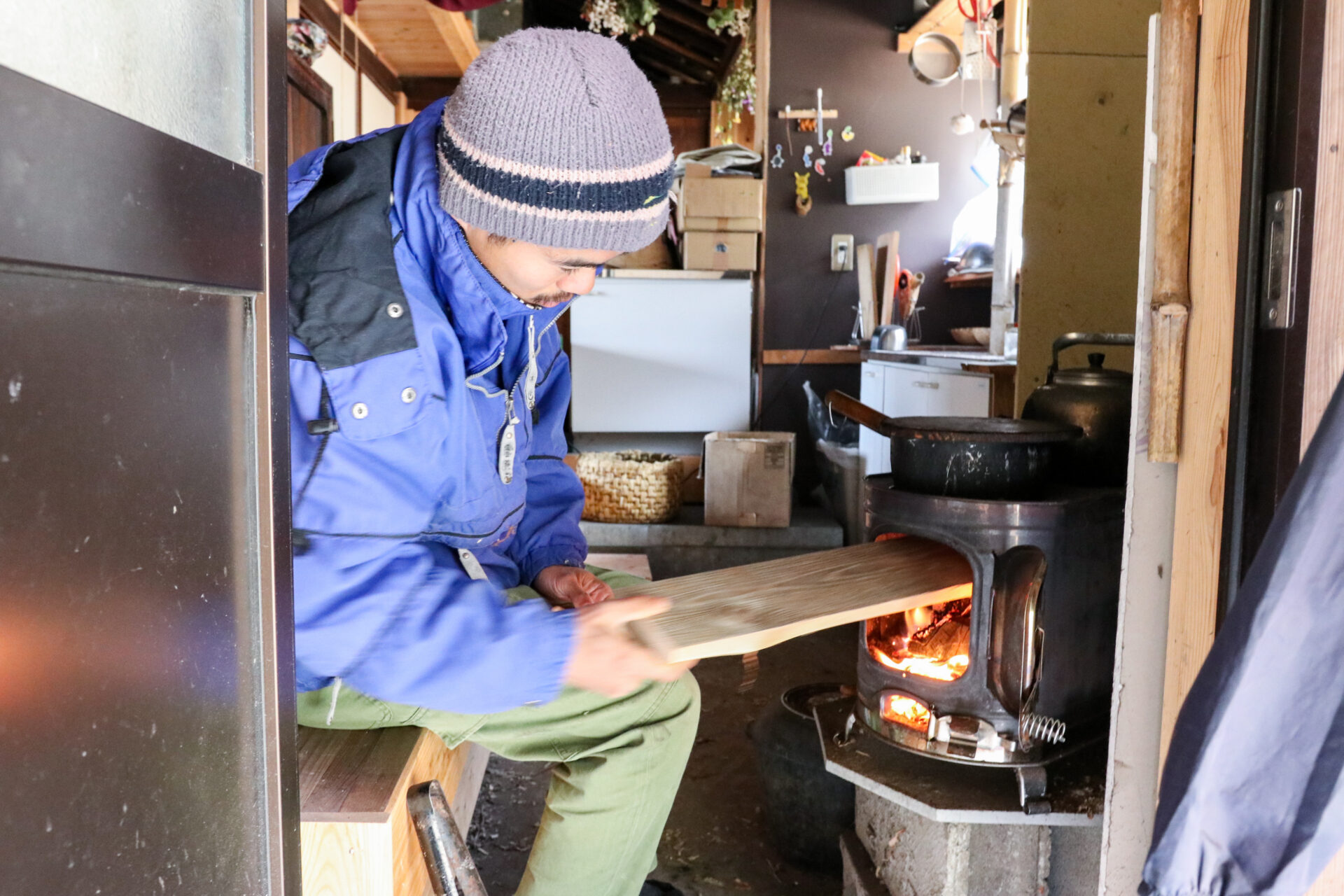
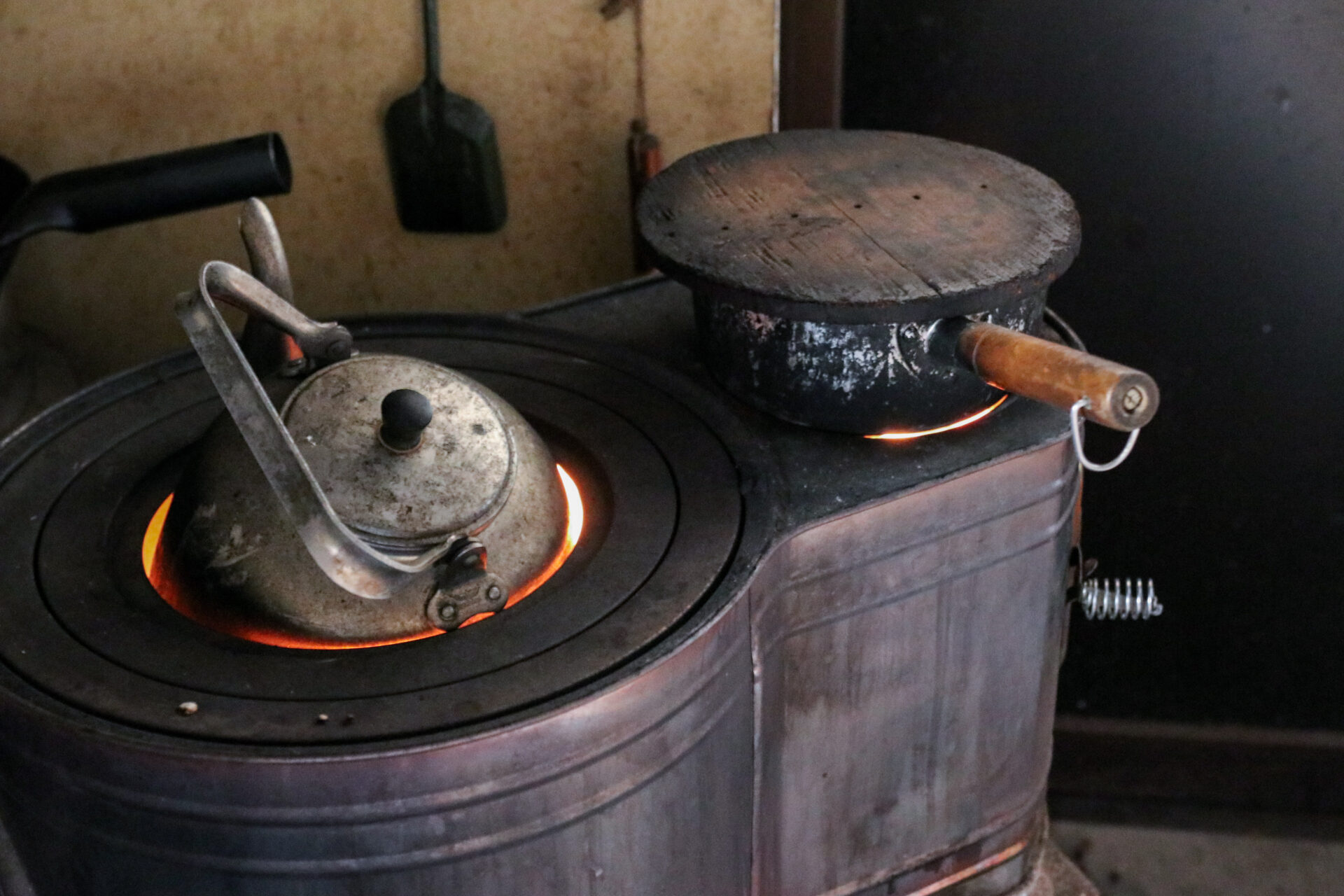
First of all, our home doesn’t use gas. We cook and heat bathwater using firewood. For water, we rely on mountain spring water rather than public infrastructure, so in that sense I feel that I’m managing things myself. That said, our food self-sufficiency is only about 20–30%.
Also, rather than trying to do everything alone as in complete self-sufficiency—which requires a lot of physical capacity—I think a system of “mutual self-sufficiency” is more sustainable. Instead of each person providing everything for themselves, people living self-sufficiently could take on different roles and support one another within a small economic circle at the scale of a settlement like Irokawa. That kind of lifestyle would strengthen the resilience of the community as a whole, rather than just the individual.
– What kind of work do you do at Tokumori Lumber?
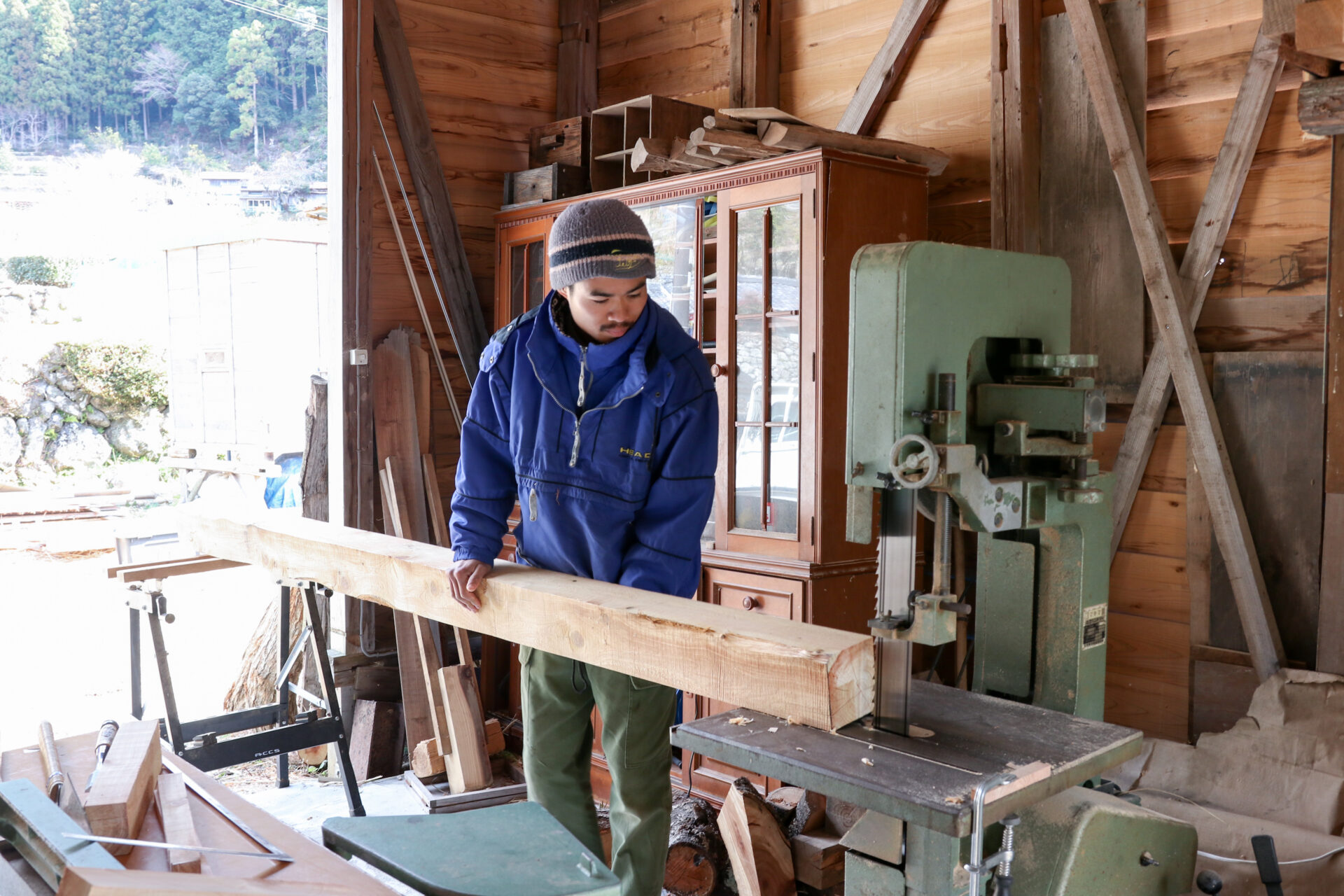
I work in sawmilling, construction, and woodworking. After moving here, I was fortunate to receive a large sawmill machine capable of cutting logs. I installed it at a site a short distance from the settlement and process trees growing in the area into beams and boards.
People often talk about food self-sufficiency, but I’m interested in self-sufficiency in housing and buildings. While there are two carpenters in Irokawa and some residents who can handle minor home repairs themselves, there aren’t many people making a living from sawmilling or construction.
By using nearby trees—some from forests that have been neglected due to lack of management—I want to produce materials that allow local people to continue living here. I believe this is another important form of self-sufficiency, and I hope to play that role.
Sharing life in Irokawa to help keep the community livable for generations to come.
– What lies behind your awareness of environmental issues and your decision to choose a self-sufficient lifestyle?
I don’t have a clear answer yet, but when I reflect on it, I think there’s a strong sense of wanting to do what is right at the core. When I learned about environmental issues in high school, I found it strange that humans were polluting the Earth—our shared home—and making it harder to live.
Looking back further, when I was in junior high school, there were many classmates who were better than me academically and athletically, and I felt a kind of social uselessness. As I searched for something through which I could feel my own value and make an effort, environmental issues may have been the field where I felt I could work harder than others.
Also, consumer life in the city felt to me like accumulating wrongdoing. I didn’t think I could maintain my mental well-being while continuing to feel “this isn’t right,” so as a way of protecting myself, I decided to move my life to a safer place.
– What has influenced you most or become an important learning experience in Irokawa?
The biggest change may be that I learned the mindset of “living with ease.” People here don’t necessarily have high incomes, but there’s a shared feeling that “things will work out.” Living among them, I came to feel that I could live without pushing myself to earn more money, and that has made life feel easier.
I’m basically someone who seeks stability. But I don’t think a life with money alone is truly stable. Many people might see my lifestyle as unstable, but with food, water, and fuel close at hand, I feel that this is the ultimate form of stability.
– Please tell us about your future outlook and what you would like to share with others.
My ultimate goal now is that when I die, this mountain village of Irokawa will still be a place where people can live. There are about 30 children from preschool through junior high school, but currently there are only about seven people in their twenties here, including myself. As we are at the tail end of the village’s population structure, if the decline continues over the next 20 or 30 years, the community may eventually reach a point where it cannot sustain itself.
To hold the line, I can only do what I’m able to do. With that in mind, I share information and try to gather like-minded people. But my intention isn’t to say, “Life here is fun.” What I really want to convey is a sense of urgency. At the same time, messages that sound like warnings can feel overwhelming. So I think the most sincere way to communicate is simply to present, calmly and honestly, how I live.
I recently got married, and with a child on the way, I sometimes struggle with how to keep everything consistent with my values. Still, I want to keep working toward realizing this goal.
・Website: Open Village Irokawa
・YouTube: Kazuhiro Tokumori
・Instagram: Kazuhiro Tokumori